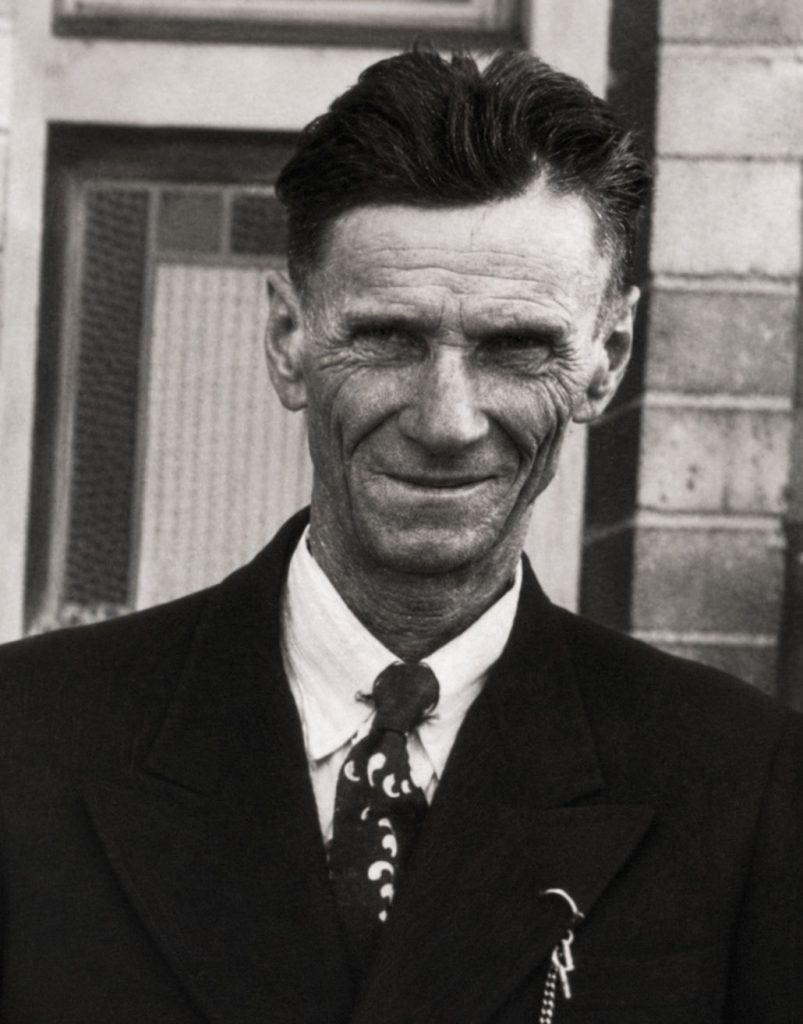
Dawid Stephanus Francois van Staden
A Lifetime Written on a Face
Introduction
Dawid Stephanus Francois van Staden was born on 16 February 1902 in the Rustenburg district of the Transvaal. He was the son of Jacobus Johannes van Staden and Elizabeth Johanna Maria Harmse and grew up in the farming communities of the western Transvaal.
On 20 September 1932, Dawid married Engela Elizabeth Mostert in Zeerust. At the time of his marriage he was twenty-nine years old, employed as a carpenter and residing at Tommiesrust in the Marico district. Engela was twenty years old and was living at Torrington in the Marico district. Together they raised a family of five children and spent most of their lives in the farming districts of Marico, Genadendal, Derdepoort and Swartruggens.
Although trained as a carpenter, Dawid was a versatile and hardworking man who supplemented his income through farming and occasional railway work. Throughout his life he farmed with cattle and maize and was known for his practical skills. Family members recalled that he made furniture, repaired equipment and possessed a remarkable ability to work with wood.
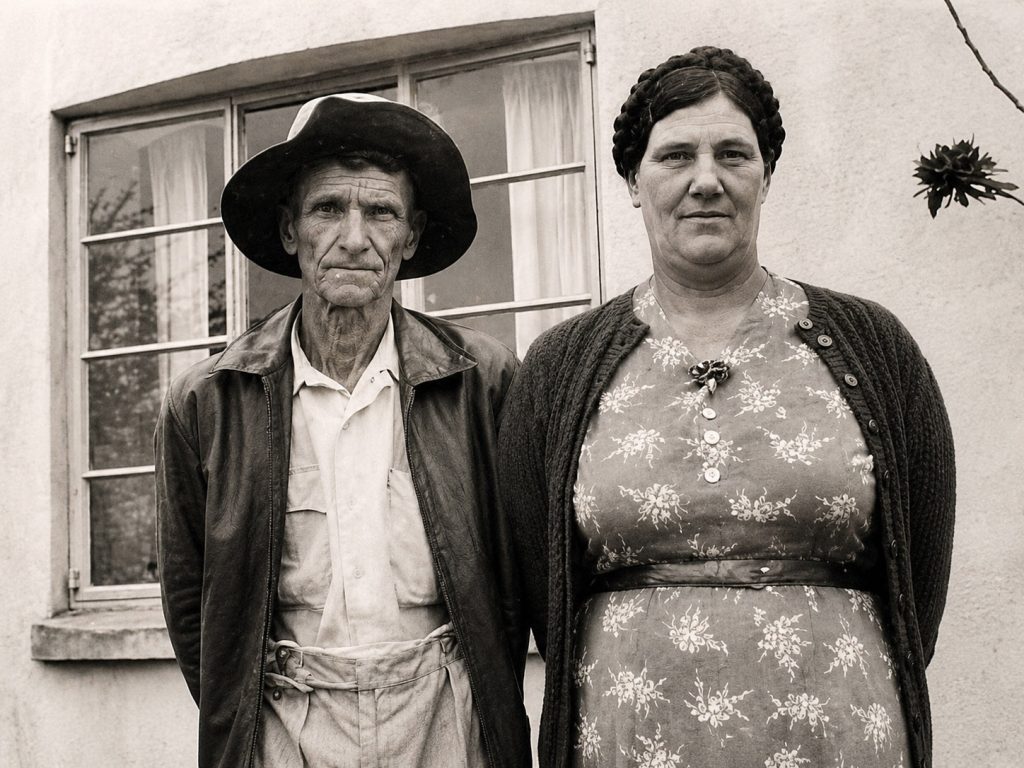
Dawid and Engela
Following their marriage, Dawid and Engela rented a farm at Eerstepoort near Genadendal behind the Dwarsberg. The property belonged to Mrs Jensen. Later the family moved across the Dwarsberg to a farm called Doornhoek in the Derdepoort district. The farm belonged to Tjaart and Nellie Raal, cattle farmers who became friends of the family. When ownership later passed to Attie Botha, Dawid continued farming in the district by renting neighbouring land where he farmed with cattle and maize.
Life in the district revolved around a close-knit rural community. The Van Stadens maintained friendships with neighbouring families including the Bothas, Snymans, Van Wyks and McCarthys. Family members remembered visiting neighbouring farms to collect pumpkins, share news and assist one another during difficult times. These relationships formed an important part of farming life in the Marico region.
Dawid also spent periods working on the railways, adding another source of income for his growing family. Despite his hardworking nature, he suffered from chronic stomach problems from a relatively young age. His illness gradually worsened and affected much of his later life.
One of the most treasured family memories comes from his grandchildren. Dawid taught them how to make bows and arrows from wild rosyntjiebos branches. Using simple materials found on the farm, he fashioned bows, arrows and arrowheads with remarkable skill. Those who watched him remembered his exceptional accuracy and patience in teaching younger generations. These memories provide a glimpse of the practical knowledge and resourcefulness that characterised rural South African life during his era.
In later years his declining health confined him increasingly to bed. Family members remembered visiting him in a cool, darkened room where he rested while battling the illness that had troubled him for many years. Despite his suffering, he remained a respected and much-loved figure within the family.
Dawid Stephanus Francois van Staden passed away on 11 May 1964 at the age of sixty-one. He was buried in the Swartruggens Cemetery. Although he left few written records behind, he is remembered through family stories, photographs and the lasting influence he had on his children and grandchildren.
Documents & Evidence:
- Marriage Certificate: Dawid Stephanus Francois van Staden and Engela Elizabeth Mostert, Zeerust, 20 September 1932.
- Family photographs identifying Dawid, Engela and members of the extended Mostert family.
- Family oral histories concerning farming activities at Eerstepoort and Doornhoek.
- Family recollections regarding his carpentry work, railway employment and chronic illness.
- Cemetery inscription at Swartruggens Cemetery recording his birth and death dates.
- Family records documenting his attendance at family events, including the wedding of Hercules Jacobus McCarthy in 1956.
- Open Questions:
- Was Dawid born in 1902 or 1903? The cemetery inscription should be compared with other civil and church records.
- Can his death notice be located to confirm family details and cause of death?
- Can records of his railway employment be found?
- Can additional information be located regarding his carpentry work and furniture making?
- Can rental agreements or land records be found for Eerstepoort and Doornhoek?
- Can a complete list of children and descendants be reconstructed from church and civil records?