Gert Hendrik Rautenbach McCarthy
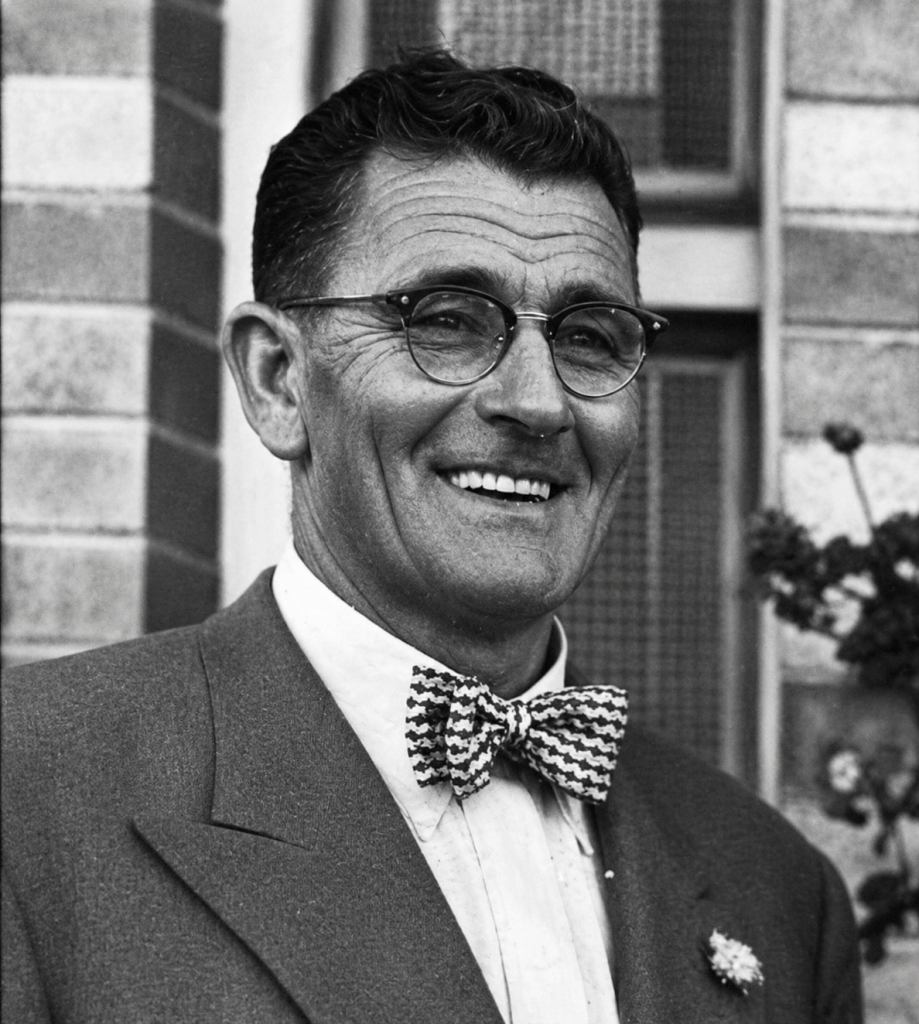
Miner, Farmer, Perfectionist, and Survivor of a Changing South Africa
Story Introduction
When I think back to my grandfather, certain memories immediately return.
- A meticulous man.
- Always dressed neatly with a tie.
- Strict and intolerant of nonsense.
- Deeply religious.
- A lover of gardens and flowers.
- A man who believed life was either right or wrong — there was very little grey in between.
Even today I can still picture him working in his garden in long sleeves and an apron, carefully preparing his clothes for the next day, polishing his shoes, and selecting a tie to match. Much of what is known about his life survives thanks to my Uncle Piet McCarthy, who preserved many of the documents and family records used during this research.
Gert Hendrik Rautenbach McCarthy was born into a South Africa still recovering from the devastation of the Anglo-Boer War.
The war had destroyed farms, scattered families, and left much of the rural economy in ruins. Many Afrikaner farming families struggled to recover during the difficult years that followed. Poverty, drought, displacement, and economic uncertainty shaped the lives of thousands across the western Transvaal and Orange Free State.
At the same time, South Africa itself was beginning to change rapidly.The discovery of gold and diamonds transformed the country’s economy. Mining towns expanded, railways spread across the interior, and many families who had once depended entirely on farming were forced to seek work in the mines and industrial centres of the Witwatersrand.
It was into this changing and uncertain world that Gert Hendrik Rautenbach McCarthy was born on 24 April 1905 at Broedersput near Vryburg. He was the fourth child of Hercules Jacobus McCarthy and Susanna Cecilia Stoffelina Elisabeth Therblanche. His early childhood was marked by hardship.
His father Hercules had lost almost everything during and after the Anglo-Boer War. Family records suggest that Hercules later worked in Zambia and Southern Rhodesia, including work connected to bridge construction and game reserve activities, before eventually returning to farming in the Free State.
The family’s farm at Elandsfontein near Lindley had earlier been ransacked during the war by British forces.
One of the most remarkable stories connected to the family explains the origin of the name “Rautenbach”, which would remain part of the McCarthy family for generations.
Around 1905 Hercules assisted a neighbour, Georg Frederik Rautenbach, with blasting work while digging a pit. Hercules descended into the shaft to prepare dynamite charges, but while being hoisted back to the surface the rope snapped. He fell to the bottom of the pit, badly injured, but still managed to cut the burning fuses before the explosives detonated. Georg’s young son, Gert Hendrik Rautenbach, climbed down to rescue him. Hercules was successfully lifted out, but during the rescue the young man fell to his death. According to family tradition, Georg later asked Hercules and his pregnant wife to name their next son after his child.
Hercules honoured the request.And so the name Gert Hendrik Rautenbach McCarthy entered the family line.
The story itself reflects much about frontier South Africa — danger, loyalty, tragedy, and the close bonds that often existed between isolated farming families.
Hendrik was only four years old when his mother Susanna died of influenza in 1909 at Kafferskraal in the Marico district. According to family stories, his father struggled deeply after her death and often drifted from place to place searching for work and opportunity. For periods of time the children were cared for by other families, including the De Klerk family.
Family memories suggest that Gert’s childhood was difficult and emotionally hard.
Yet those difficult years also shaped the determination and discipline that would define much of his later life.
On 26 July 1927, Gert Hendrik Rautenbach McCarthy married Elsie Rachel van der Merwe in Ventersdorp.
He was twenty-two years old. Elsie was twenty.
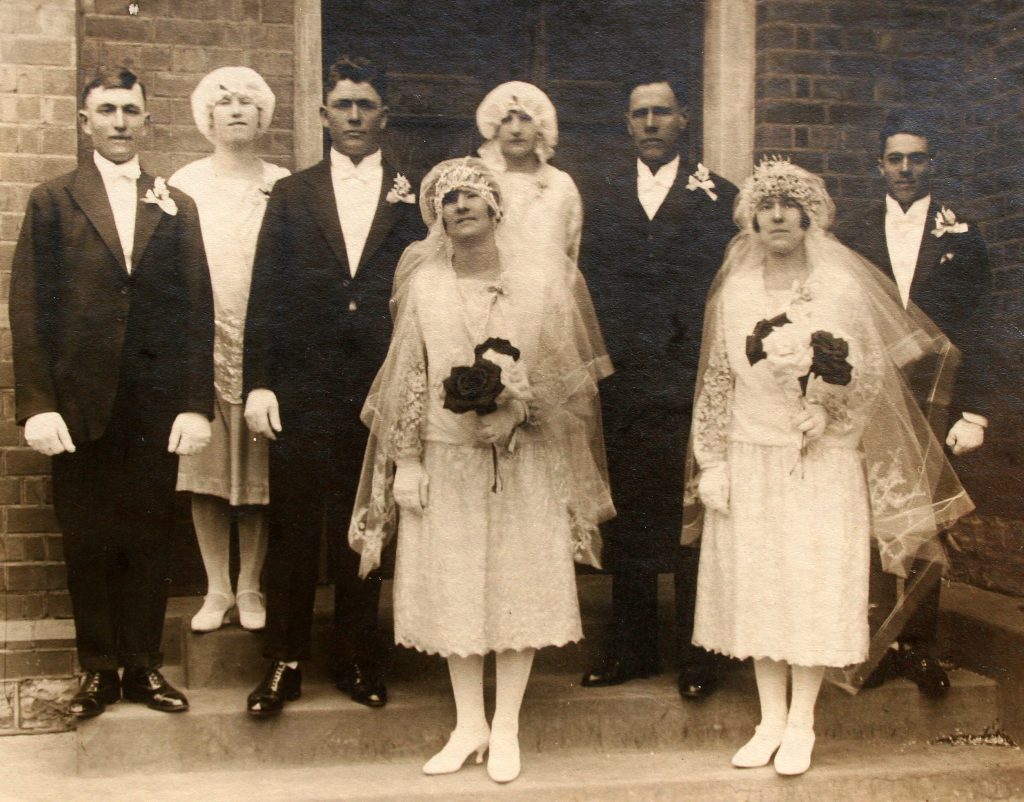
Hendrik and Elsie at their wedding
At the time Hendrik lived at Heuningkrans with his Uncle Harry while Elsie lived at Klipplaasdrift about six kilometres outside Ventersdorp. According to family stories, he regularly cycled enormous distances over weekends simply to visit her.
Like many young South Africans during the 1920s and 1930s, Gert found himself caught between the old farming economy and the rapidly growing mining industry.
South Africa during these years was undergoing major economic transformation. Mining expanded rapidly across the Witwatersrand while many rural farming communities struggled through droughts, falling agricultural prices, and the after-effects of war. Families moved constantly between farms, diggings, and mining towns searching for stability and work.
Hendrik initially worked for his father on the diamond diggings. He supervised labour teams while his father travelled between sites collecting the proceeds. Despite years of hard work, he reportedly received little more than food money and no proper salary.
Slowly, through determination and careful saving, he managed to accumulate horses, sheep, and oxen of his own. Yet when he married, family stories claim that his father took everything, forcing the young couple to begin their married life with almost nothing.
Their first years together were spent around Lichtenburg and the diamond fields. Their eldest son, Hercules Jacobus McCarthy, was born on 14 October 1928.
Soon afterwards Hendrik entered the gold mining industry on the East Rand, joining thousands of Afrikaner men who moved from struggling rural districts into the mines during the difficult economic years before and during the Great Depression.
Mining became one of the defining forces shaping twentieth-century South Africa.
The growth of towns such as Brakpan, Randfontein, and Springs created new working-class Afrikaner communities built around the gold industry. Conditions underground were harsh and dangerous, but mining offered regular wages at a time when many farming families were battling to survive.
Hendrik began work at Brakpan Mines on 19 October 1929 as a learner miner.
Over the years he worked at:
- Brakpan Mines
- Van Dyk Consolidated Mine
- Grootvlei Mine
- Blyvooruitzicht Mine
He worked underground for many years and eventually became known as an excellent underground production man.
The family lived in Brakpan for fourteen years while several children were born there:
- Aletta Sophia
- Willem Sterrenberg
- Gert Hendrik Rautenbach
- James McCarthy
- Gert Johannes McCarthy
In 1941, hoping to return to farming, Hendrik rented a large farm near Welverdiend from Frew McMillan. But severe drought conditions, part of the broader agricultural difficulties facing South Africa during the war years, eventually forced him back into mining once more.
He returned to Blyvooruitzicht Mine, first underground and later as a surface foreman after his health began deteriorating.
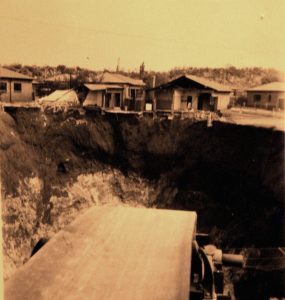
1966 a Sinkhole in Blyvooruitzicht
By the late 1940s South Africa’s mining economy had expanded enormously, but the human cost of underground mining was becoming increasingly visible. Silicosis and lung disease affected thousands of miners exposed to dust underground.
In 1948 Hendrik was officially diagnosed with silicosis. Documents from the Witwatersrand Gold Mines Employees Provident Fund confirmed his condition and subsequent compensation benefits. Afterwards he was transferred to surface duties where he became responsible for parks, gardens, and sports fields — work much better suited to his love of order, gardening, and careful maintenance.
Family members still remembered the beautiful cannas and dahlias that filled his garden. Despite his strict personality, he possessed a generous heart and often went out of his way to help people in need. He also retained the fiery McCarthy temper.
One family story recalled a man speaking disrespectfully to his wife Elsie while relatives were visiting. Before anyone could react, Hendrik had knocked the man flat to the ground.
His family remembered him as:
- disciplined
- proud
- deeply religious
- hardworking
- and exceptionally neat.
In 1968 he retired and moved with Elsie to Makwassie to live closer to their daughter.The couple had been married for nearly six decades and were able to celebrate their fiftieth wedding anniversary in 1977 at a family gathering arranged in Carletonville.
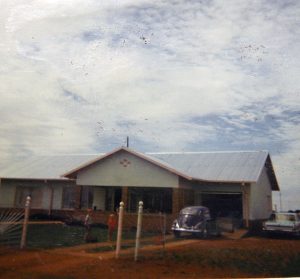
Hendrik bought this house for his wife in Makwassie
Elsie Rachel van der Merwe McCarthy died in 1985.
Two years later, in 1987, Hendrik married Wilhelmina Magrita Daneel.
Gert Hendrik Rautenbach McCarthy died on 4 April 1991 in Brakpan.
He was buried beside Elsie in the Makwassie cemetery.
His life stretched across one of the most dramatic periods in South African history:
- the aftermath of the Anglo-Boer War
- the rise of the mining economy
- the Great Depression
- drought and rural hardship
- the growth of industrial towns
- and the transformation of Afrikaner society during the twentieth century.
Through documents, mining records, family stories, photographs, and fading memories, the life of Gert Hendrik Rautenbach McCarthy still survives — a proud, disciplined man shaped by hardship, faith, work, and the changing world around him.
| Year | Event |
| 21 Jun 1898 | Hercules Jacobus McCarthy married Susanna Cecilia Stoffelina Elisabeth Therblanche in Lindley |
| 9 Oct 1899 – 31 May 1902 | Second Anglo-Boer War |
| 23 Sep 1901 | British forces ransacked the farm Elandsfontein near Lindley |
| 2 Mar 1902 | Daniel Johannes Jacobus Philippus McCarthy born |
| 18 Mar 1904 | Hercules Jacobus Johannes McCarthy born |
| c.1904 | Dynamite accident involving the Rautenbach family occurred |
| 24 Apr 1905 | Hendrik Gert Rautenbach McCarthy born at Broedersput near Vryburg |
| 11 Oct 1906 | Elsie Rachel van der Merwe born in Wolmaranstad |
| 29 May 1909 | Susanna Cecilia Stoffelina Elisabeth McCarthy died at Kafferskraal, Marico |
| 1910 | Photograph taken of Hercules and his children at Zeerust |
| 20 Sep 1918 | Hercules’s second wife, Maria Jacoba Elizabeth McCarthy, died at Heuningkrantz near Wolmaranstad |
| 1919 | Hercules signed estate liquidation documents in Makwassie |
| 22 Aug 1920 | Hercules inherited Maria Jacoba Elizabeth van Heerden’s farm |
| 26 Jul 1927 | Gert Hendrik Rautenbach McCarthy married Elsie Rachel van der Merwe in Ventersdorp |
| 14 Oct 1928 | Son Hercules Jacobus McCarthy born |
| 19 Oct 1929 | Hendrik started work at Brakpan Mines as a learner miner |
| 1929 | Hendrik and Elsie relocated to Brakpan |
| 12 Mar 1930 | Daughter Aletta Sophia McCarthy born in Brakpan |
| 31 Dec 1932 | Son Willem Sterrenberg McCarthy born in Brakpan |
| 25 Jan 1937 | Hendrik joined Van Dyk Consolidated Mine |
| 9 Jun 1937 | Hendrik joined Grootvlei Mine |
| 13 Jul 1937 | Son Gert Hendrik Rautenbach McCarthy born |
| 1941 | Hendrik and Elsie moved to a farm near Welverdiend |
| 7 Sep 1942 | Hendrik joined Blyvooruitzicht Mine |
| 1943 | Family relocated to Blyvooruitzicht |
| 20 Apr 1946 | Son James McCarthy born in Randfontein |
| 11 May 1948 | Son Gert Johannes McCarthy born at Klipplaasdrift near Ventersdorp |
| 1948 | Hendrik officially diagnosed with silicosis |
| 23 Aug 1951 | Hendrik received compensation linked to silicosis |
| 1 Jul 1959 | Maria Johanna McCarthy, born Furstenberg, died in Klerksdorp |
| 24 May 1960 | Hercules Jacobus McCarthy died at Odendaalsrus |
| 30 Apr 1968 | Hendrik retired from Blyvooruitzicht Mine |
| 1968 | Hendrik and Elsie moved to Makwassie |
| 1977 | Hendrik and Elsie celebrated their fiftieth wedding anniversary in Carletonville |
| 21 Oct 1985 | Elsie Rachel van der Merwe McCarthy died in Makwassie |
| 23 May 1987 | Hendrik married Wilhelmina Magrita Daneel in Brakpan |
| 4 Apr 1991 | Gert Hendrik Rautenbach McCarthy died in Brakpan |
| 12 Apr 1991 | Hendrik buried in Makwassie beside Elsie |
Key records and sources connected to the life of Gert Hendrik Rautenbach McCarthy include:
• Birth certificate reproduced in 1935
• Dutch Reformed Church baptism records
• Marriage certificate of Gert Hendrik McCarthy and Elsie Rachel van der Merwe
• Mining employment records from:
– Brakpan Mines
– Van Dyk Consolidated Mine
– Grootvlei Mine
– Blyvooruitzicht Mine
• Witwatersrand Gold Mines Provident Fund correspondence
• Medical documentation relating to silicosis
• Estate and family papers preserved by Piet McCarthy
• Family photographs from Brakpan, Blyvooruitzicht, Makwassie, and Carletonville
• Oral family history shared by Piet McCarthy, James McCarthy, Beulah, and other relatives
• Family stories connected to the Rautenbach dynamite accident
• Retirement and employment records from the mining industry
Together these records and memories helped reconstruct the life of a man who lived through the transformation of South Africa from a rural post-war farming society into an industrial mining economy.
Open Questions:
Despite the large amount of surviving family material, several important questions still remain:
- Can official records confirming Hercules McCarthy’s work in Zambia and Rhodesia still be located?
- Where exactly were the diamond diggings where Hendrik worked with his father?
- Can the Rautenbach dynamite story be historically verified through local records?
- Are there surviving mining photographs from Brakpan, Grootvlei, or Blyvooruitzicht connected to Hendrik?
- Can additional records be found relating to his silicosis diagnosis and compensation?
- Are there surviving documents relating to the Welverdiend farm lease from Frew McMillan?
- Can more information be uncovered regarding the difficult childhood years after Susanna’s death?
- Are there surviving descendants who still preserve stories, photographs, or letters connected to the Blyvooruitzicht years?
- Can the original photographs from the 1977 golden wedding anniversary celebration still be digitally preserved and restored?